
Legally Reviewed by Michael Throneberry, Attorney on July 16, 2026
Mesothelioma is one of the hardest cancers a family can face, and in Phoenix it is often tied to a job or a worksite the patient never thought twice about. The disease can take decades to appear, so a person who handled asbestos in the 1960s, 1970s, or 1980s may only now be getting the diagnosis. By the time symptoms show up, families are trying to absorb medical news and figure out their legal options at the same time. If asbestos caused the illness, Arizona law may allow the patient and the family to recover money for treatment, lost income, and the harm the disease has caused.
That is where our firm comes in. At Throneberry Law Group, we have spent more than 20 years standing up for mesothelioma patients and their families, and we bring something most large asbestos practices do not. Attorney Michael Throneberry lost his own father-in-law to this disease, so the work is personal. We serve Phoenix-area clients as part of a nationwide asbestos practice, we can help Spanish-speaking families, and clients work directly with Mr. Throneberry rather than being handed off to rotating staff. If you want a Phoenix mesothelioma lawyer who treats your case like it matters, we are ready to talk, and you can learn more about our statewide work on our Arizona mesothelioma lawyers page.
“Michael Throneberry is different than other attorneys, he’s a straight shooter, he’s honest, and he always follows up. His customer service is second to none. If you’re looking for a mesothelioma attorney, I would highly recommend him.”
— George L.
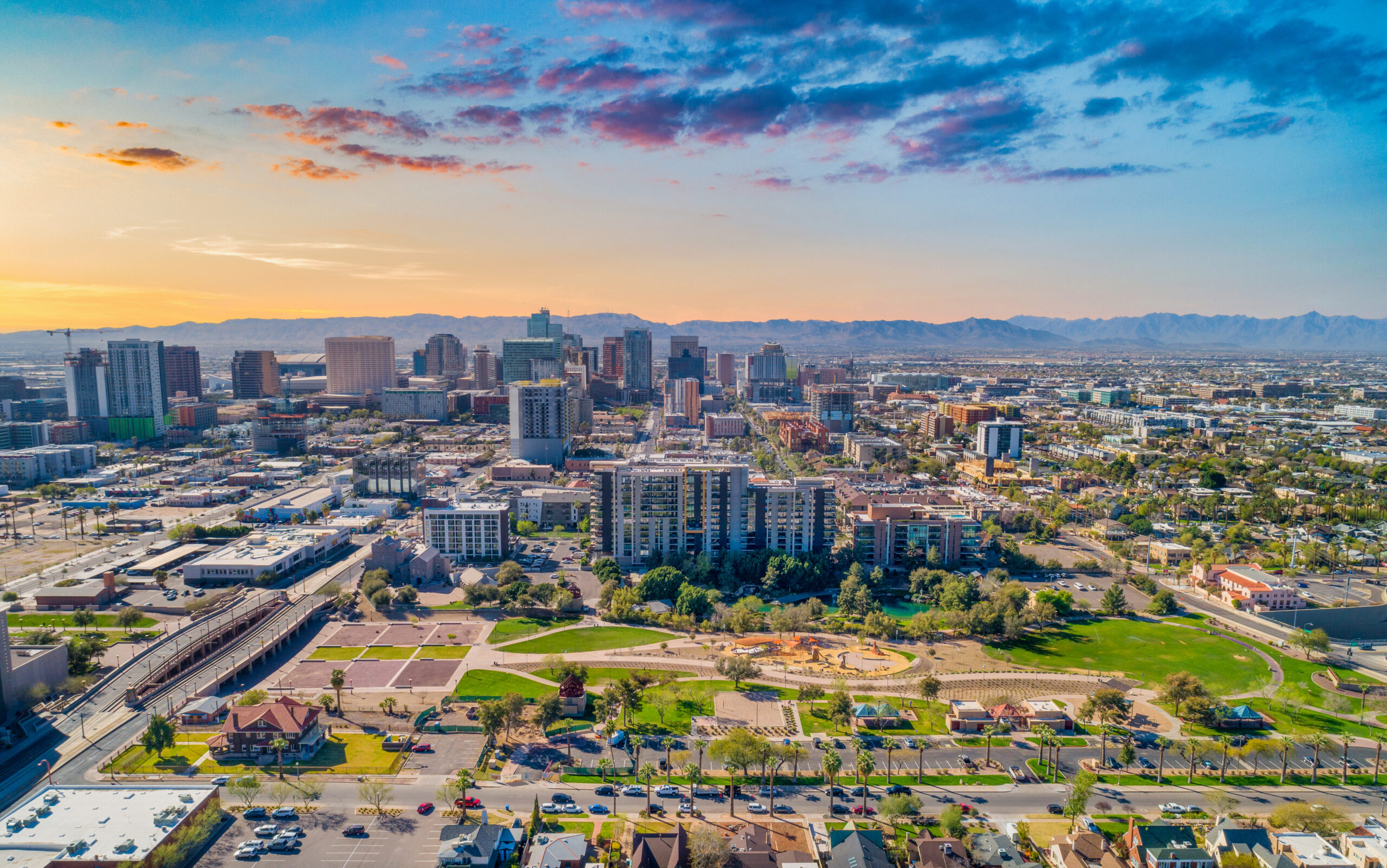
Phoenix Has a Long and Costly History of Asbestos Exposure
Few cities in the Southwest carry an asbestos history as deep as Phoenix. For much of the twentieth century, asbestos was treated as a cheap, heat-resistant miracle material and packed into insulation, cement, floor tile, roofing, gaskets, and fireproofing. The people who built and ran Phoenix breathed those fibers in, usually with no warning at all. According to the CDC, 45,221 Americans died of malignant mesothelioma from 1999 through 2015, and much of Arizona’s share of that toll traces back to the industrial and military activity centered on the Phoenix area.
The exposure did not come from one place. It came from mining, from military bases, from power generation, and from the ordinary commercial buildings people worked in every day. Because so many different sources were involved, tracing where a specific patient encountered asbestos takes real investigation, which is a core part of what we do on every case.
Industrial and Mining Sites
Arizona was an asbestos-mining state, and the processing of asbestos and asbestos-contaminated ore left a mark on the Phoenix workforce. W.R. Grace & Co. ran a vermiculite processing operation in the Phoenix area, sometimes called Solomon’s Mines, where workers handled ore shipped in from the contaminated mine in Libby, Montana. That vermiculite carried asbestos fibers, and the workers who bagged, moved, and processed it often carried those fibers home on their clothing. Manufacturing plants, cement operations, and industrial supply facilities across the valley added to the exposure, since asbestos was a standard ingredient in the products they made and used.
Phoenix’s industrial employers put thousands of tradespeople in daily contact with asbestos. At the Reynolds Metals aluminum plant, later run by Alcoa, refractory brick and cement from North American Refractories and Harbison-Walker lined the furnaces, and the insulation contractor J.T. Thorpe worked the site for years. The AiResearch (Garrett) manufacturing plant, the Motorola plant, the General Electric plant, and the Western Electric Phoenix Cable Plant all used asbestos insulation on their equipment and piping, much of it Owens Corning Kaylo pipe and block and Fibreboard Pabco product. Each of these sites appears in the manufacturers’ own bankruptcy trust records, which is strong evidence that their asbestos products were used there.
Military Installations
Luke Air Force Base, just west of Phoenix, used asbestos for decades in barracks, hangars, mechanical shops, and aircraft maintenance areas. Service members and civilian workers who repaired equipment, worked on brakes and insulation, or simply lived and worked in older buildings on base were exposed as part of their daily routine. Veterans make up a large share of mesothelioma patients nationwide, and many Phoenix-area veterans were exposed during their service. Veterans may be able to pursue both civil claims and veterans’ asbestos benefits at the same time, and we help families understand both paths.
Power Plants and Public Buildings
Power generation was another major source. The Palo Verde Nuclear Generating Station west of Phoenix used asbestos insulation during its construction, and older fossil-fuel plants across the region relied on asbestos to insulate pipes, boilers, and turbines. Beyond heavy industry, asbestos was built into schools, hospitals, hotels, and office buildings throughout Maricopa County well into the 1970s. Tradespeople who renovated or maintained those buildings, and in some cases the people who occupied them, were exposed to fibers released when asbestos materials were cut, sanded, or disturbed.
Phoenix’s power and water utilities were among the heaviest asbestos users of all. The West Phoenix Power Plant, the Kyrene Steam Plant, the Agua Fria generating station, and the Salt River Project ran on boilers and steam lines wrapped in asbestos, including Babcock & Wilcox boilers and block insulation, Combustion Engineering boilers, and Owens Corning Kaylo insulation. Their predecessor utility, Central Arizona Light and Power, appears in these trust records as far back as the 1930s.
Hospitals, Schools, and Public Buildings Tied to Asbestos
Asbestos was not limited to heavy industry. It was sprayed and troweled into the public buildings Phoenix families used every day. W.R. Grace Monokote fireproofing was applied at the Arizona State Capitol Building, the Veterans Administration Hospital, Banner Good Samaritan Medical Center, and Shadow Mountain High School. U.S. Gypsum joint compound and ceiling tile went into the Phoenix Civic Plaza, the Arizona State University library, and the Arizona State Hospital. St. Joseph’s Hospital, John C. Lincoln Hospital, and the ASU campus turn up in the Owens Corning, Babcock & Wilcox, and Fibreboard trust records too. If you worked in, built, or maintained any of these places, that history may matter to your case, and our Phoenix asbestos exposure sites page goes deeper on the specific locations tied to exposure.
Jobs and Worksites That Put Phoenix Workers at Risk
Asbestos was woven into the tools, materials, and methods of the industries that built Phoenix, so exposure often came down to a person’s trade. Some occupations carry a much higher exposure history than others, and knowing the job is often the first clue in tracing a claim. The following fields are among the most commonly linked to mesothelioma in the Phoenix area:
- Construction workers: Crews on commercial and residential projects across the valley routinely handled asbestos insulation, joint compound, floor tile, and roofing for decades.
- Electricians: Tradespeople working in older Phoenix buildings ran into asbestos insulation inside switchboards, panels, and wiring systems.
- Pipefitters and plumbers: Workers in industrial and commercial settings across Maricopa County handled asbestos pipe wrap, gaskets, and sealing materials.
- Power plant and industrial workers: Employees at plants like Palo Verde and other regional facilities worked around asbestos used as standard equipment and pipe insulation.
- Military personnel and base workers: Service members and civilian staff at Luke Air Force Base and other installations met asbestos in barracks, hangars, and maintenance bays.
- Boilermakers and HVAC workers: These trades cut, wrapped, and replaced insulation on boilers, ducts, and climate systems that were full of asbestos.
- Auto and brake mechanics: Brake pads, clutches, and gaskets contained asbestos, and grinding or blowing out brake dust released fibers into the shop air.
That list is a starting point, not a limit. If a job put someone near old insulation, gaskets, pipe wrap, floor tile, or brake work, it is worth a conversation. Our team also looks closely at occupational asbestos exposure records to connect a diagnosis to the specific products and worksites behind it.
Secondhand Asbestos Exposure Reaches Families Too
Not every mesothelioma patient worked around asbestos. Many were exposed at home, through a spouse, parent, or roommate who carried fibers back on work clothes, boots, hair, and tools. A wife who shook out and laundered her husband’s dusty coveralls for years, or a child who hugged a parent coming off a shift, could inhale enough asbestos over time to develop the disease decades later. This is called secondhand or take-home exposure, and Arizona law recognizes it as a valid basis for a claim.
Proving take-home exposure takes careful work, because the connection is one step removed from the jobsite. We reconstruct the family member’s work history, identify the products and sites involved, and show how the fibers traveled home. Families are often surprised to learn they have a claim at all, which is one more reason to ask rather than assume the exposure does not count.
How Asbestos Exposure Leads to Mesothelioma
Mesothelioma is a cancer of the thin lining that surrounds the lungs, abdomen, and other organs, and asbestos is its primary cause. When asbestos fibers are inhaled or swallowed, the body cannot break them down or push them out. The fibers lodge in tissue and cause inflammation and scarring that, over many years, can turn into cancer. This is why the disease so often appears 20 to 50 years after the exposure that caused it.
Why the Disease Takes Decades to Appear
That long latency period is central to how these cases work. A Phoenix retiree diagnosed today may have been exposed on a jobsite in the 1970s at a company that no longer exists. That does not close the door on a claim. Many asbestos manufacturers set up bankruptcy trust funds to pay victims, and those trusts can still pay valid claims decades later. Federal worker-safety rules on asbestos exposure limits show how long this danger has been officially documented.
Why a Thorough Exposure Investigation Matters
Because the science and the paper trail both stretch back decades, the value of a case often depends on how thoroughly the exposure is investigated. That investigation is where an experienced asbestos firm earns its keep, and it is the part a general practice or a high-volume settlement mill tends to rush.
Filing Deadlines for Arizona Mesothelioma Claims
Arizona sets firm deadlines for filing a mesothelioma case, and missing one can permanently end the right to recover, no matter how strong the case is. For a personal injury claim brought by the patient, Arizona generally allows two years from the date of diagnosis to file, under A.R.S. § 12-542. Because mesothelioma is often diagnosed late, that two-year clock can run out faster than families expect while they are focused on treatment.
Deadlines for Wrongful Death Claims
When a patient has passed away, the family may bring a wrongful death claim instead. Arizona’s wrongful death statutes, A.R.S. § 12-611 through § 12-613, set out who may file and what the claim can recover, and the two-year deadline generally runs from the date of death rather than the date of diagnosis. These are different claims with different clocks, and the right one depends on the facts. Our mesothelioma statute of limitations page breaks down how these deadlines work in more detail.
Trust Fund and VA Claim Timelines
Trust fund claims and VA benefit applications run on their own separate timelines as well, which is one more reason not to wait. The single most useful thing a family can do after a diagnosis is talk with a lawyer early, so no deadline quietly passes and no source of recovery is lost. (Deadlines and statute citations should be confirmed with counsel for each specific case.)
What Compensation May Be Available in a Phoenix Mesothelioma Case
Mesothelioma is expensive, and the money at stake in these cases reflects that. Treatment alone, including surgery, chemotherapy, radiation, and palliative care, can climb well into six figures, and that sits on top of lost wages, reduced earning ability, and the strain on a family caring for a seriously ill loved one. Arizona mesothelioma cases routinely involve substantial recoveries, though every case is different and no honest lawyer can promise a specific number.
Sources of Mesothelioma Compensation
Compensation can come from more than one place, and often several at once. The main sources include lawsuits against the manufacturers or companies responsible for the exposure, claims against asbestos bankruptcy trust funds, VA benefits for qualifying veterans, and in some cases workers’ compensation. We look at every available avenue on each case and pursue them in the way most likely to maximize the total recovery for the family. You can read more about the types of damages on our mesothelioma compensation page.
What Determines the Value of Your Case
What a family actually recovers depends on the exposure history, the products and companies involved, the stage of the disease, and how carefully the case is built. This is another reason the depth of the investigation matters so much. A firm that takes the time to identify every exposure source and every liable party gives the family the best chance at full compensation, rather than settling for the first offer that comes along.
What Working With a Phoenix Mesothelioma Lawyer Looks Like
From the first call, our goal is to make a hard situation easier to carry. We start with a free, no-obligation case review, where we listen to the patient’s story, ask about the jobs and worksites in their history, and explain in plain terms whether there is a claim and what it might involve. There is no pressure and no fee to have that conversation. We also handle cases on a contingency basis, which means the family pays no attorney fees unless we recover money for them.
How We Build Your Case
Once we take a case, we do the heavy lifting. We gather medical records, reconstruct the work and exposure history, identify the responsible companies and the trust funds tied to them, and handle the filings and deadlines. The patient and family focus on treatment and each other while we handle the legal side. Throughout the case, families deal directly with Michael Throneberry, not a call center, so the person who knows the case is the person who answers the questions.
Serving Families Across the Phoenix Valley
We serve clients across Phoenix and the surrounding valley, including Mesa, Scottsdale, Tempe, Chandler, Gilbert, and Glendale, and we also help families in Tucson and the rest of the state. If travel is difficult for a patient in treatment, we come to them. Our Arizona contact page explains how to reach the team and what to expect from a first conversation.
Why Phoenix Families Choose Throneberry Law Group
Many national asbestos firms run on volume. They sign large numbers of clients, move them through a standard process, and hand each file off to whichever staff member is available. Our firm was built on the opposite idea. Michael Throneberry started this practice because he believes mesothelioma clients deserve a lawyer who knows their case by name, answers their calls, and treats their family with the urgency he would want for his own. That belief comes from having watched this disease take his own father-in-law.
Direct Attention From Your Attorney
That personal investment shows up in how the work gets done. Clients work directly with Mr. Throneberry from the first consultation through resolution. We keep our caseload manageable on purpose, so no family becomes a file number. We can also serve Spanish-speaking clients, so language is not a barrier to getting help. Over the years, we have recovered billions of dollars for mesothelioma victims nationwide, and reviews from clients reflect what that hands-on approach feels like from the client’s side of the table. You can read more about Michael’s background on his attorney profile.
Our Phoenix Office
We keep an office in downtown Phoenix at 40 North Central Avenue, and we serve mesothelioma clients across Arizona as part of our nationwide asbestos practice. What that means for you is simple. You get a firm with a real Arizona presence and a national track record, without the impersonal machinery of a settlement mill. The door to a free conversation is always open.
Common Questions About Phoenix Mesothelioma Claims
Families new to this process tend to ask the same first questions, so here are direct answers to the ones we hear most.
How Long Do I Have to File a Mesothelioma Claim in Arizona
In Arizona, you generally have two years to file a mesothelioma claim. For a patient’s personal injury case, that two-year clock usually starts on the date of diagnosis under A.R.S. 12-542. For a wrongful death case brought by the family, it usually starts on the date the patient passed away. Asbestos trust fund claims and VA benefit applications run on their own separate timelines. Because the deadline can pass quickly while a family is focused on treatment, the safest step is to speak with a lawyer soon after a diagnosis. We offer a free, no-obligation case review to confirm which deadline applies to your situation.
Do I Have a Case if the Company That Exposed Me Is Out of Business
Often, yes. Many asbestos manufacturers filed for bankruptcy and set up trust funds to pay victims, and those trusts can still pay valid claims today even though the company no longer operates. Your exposure may also trace to other companies that are still in business, or to products made by several different manufacturers. Finding every source is a core part of how we build these cases, so a closed company is rarely the end of the story. We can review your work history at no cost and tell you which claims may be available to you.
What Does It Cost to Hire a Phoenix Mesothelioma Lawyer
Nothing up front. We handle mesothelioma cases on a contingency basis, which means you pay no attorney fees unless we recover money for you. The first case review is free and comes with no obligation. This lets families get real answers and start protecting their deadlines without taking on a financial burden while they are already facing treatment costs. If we take your case, we advance the work of building it, and our fee comes only out of a recovery. That way the cost of a lawyer is never a reason to wait.
Can I Sue Companies That Are Still in Business
Yes. Many companies that made or sold asbestos products are still operating, and they can be sued directly in a civil lawsuit. Bankruptcy trust claims and civil lawsuits are separate paths, and most mesothelioma cases use both at once, trust claims against the manufacturers that went bankrupt and civil suits against the solvent companies still in business. Viable defendants can include product makers, suppliers, contractors, and in some cases the owner of the property where the exposure happened. Because one work history often points to several responsible companies, we pursue every source that applies. We can review your work history at no cost and identify the companies and trusts your case may reach.
Talk With the Nationwide Mesothelioma Lawyers at Throneberry Law Group
A mesothelioma diagnosis forces families to make important decisions on a short clock, and the legal deadlines do not pause for treatment. The sooner you understand your options, the more room you have to protect them. Our firm brings more than 20 years of asbestos experience, a nationwide reach, Spanish-speaking help, and a founder whose commitment to this work is personal. We handle the investigation, the filings, and the deadlines so your family can focus on what matters most, and you pay no fees unless we recover money for you.
If you or your family is dealing with mesothelioma in Phoenix or anywhere in Arizona, we are ready to listen and to help you understand what comes next, starting with a free and confidential case review that you can request through our contact form.

Our Principal Attorney
Michael Throneberry
President, National Trial Lawyers Asbestos & Mesothelioma Bar (2025 and 2026)
Michael Throneberry has spent more than 20 years fighting for mesothelioma and asbestos victims and their families across the country. He serves as the 2025 and 2026 President of the National Trial Lawyers Asbestos & Mesothelioma Bar (the Asbestos/Mesothelioma Trial Lawyers Association, a specialty association of The National Trial Lawyers).
He founded Throneberry Law Group after losing his own father-in-law to mesothelioma, and clients work directly with him from the first call through resolution.